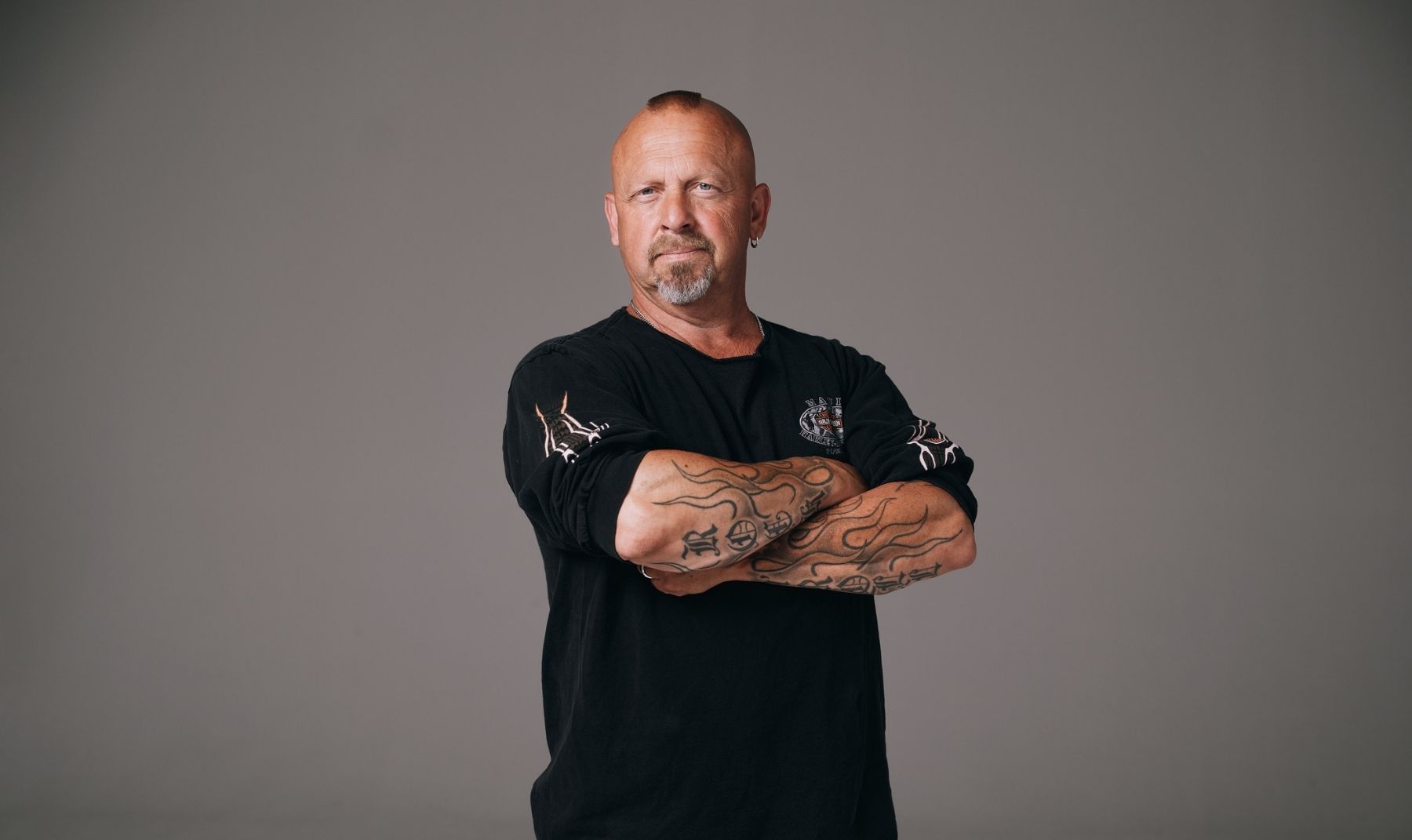
Le vendredi 26 juin 2026, le Chapiteau de fête deviendra le centre du dialecte, de l'accordéon et de l'ambiance de fête : l'Alpenrock-Party fera monter sur scène deux artistes suisses de renom.
VolXRoX ouvrira les festivités avec son mélange de styles énergique – du rock au boogie-woogie, en passant par la country et les sonorités folkloriques. Leurs chansons en dialecte entraînent irrésistiblement et garantissent une ambiance déchaînée dès le début dans le Chapiteau de fête.
Après cela, Trauffer montera sur scène. Quand il prend son accordéon, c'est le moment de chanter, danser et faire la fête : son mélange inimitable de sons traditionnels, de pop moderne et d'éléments rock séduit un large public depuis des années.
Dès 2018, Trauffer & VolXRoX se sont produits ensemble sur scène au Trucker & Country-Festival – leur retour en 2026 promet à nouveau une soirée de fête inoubliable sous le Chapiteau de fête.
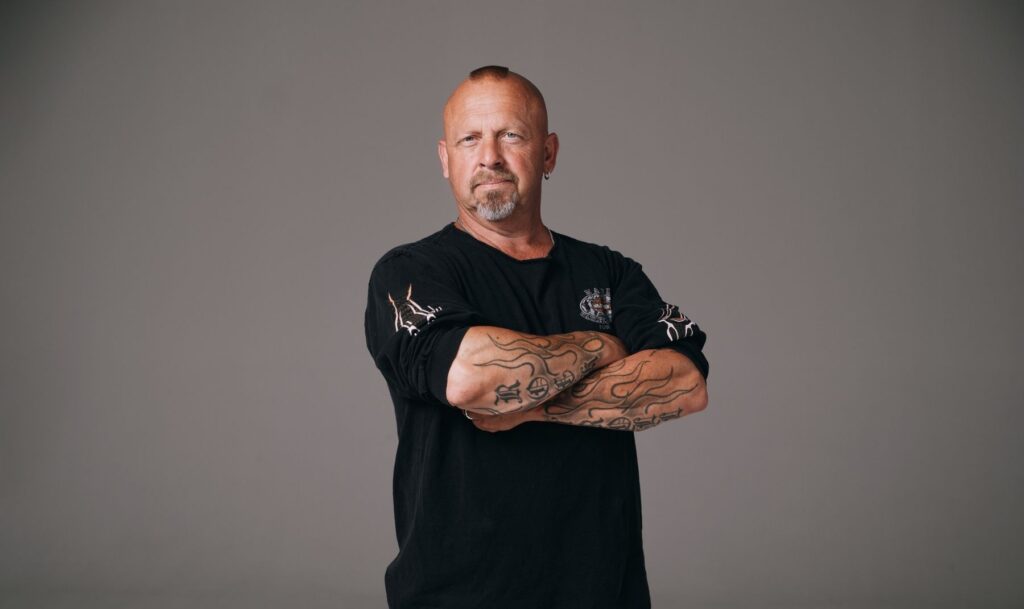
Le 25 juin 2027, la Swiss Rock Night fera vibrer l'Chapiteau de fête au rythme du rock suisse.
Parmi les artistes présents, on retrouve GÖLÄ, qui compte depuis la fin des années 90 parmi les grands noms de la scène musicale suisse. Sa voix rauque et unique ainsi que ses textes sans détours sont depuis longtemps devenus sa marque de fabrique. Des tubes cultes, des hymnes rock et des riffs de guitare puissants promettent une soirée de vendredi inoubliable à Interlaken.
ROCK-OUT sera également sur scène. Ces quatre musiciens originaires de l’Emmental se sont consacrés sans compromis au rock ’n’ roll classique et se sont depuis longtemps fait un nom à l’international. Pleins d’énergie et sans fioritures, ils apportent à l’ Chapiteau de fête le son d’une nouvelle génération de rock.

Environ 50 000 visiteurs, trois journées ensoleillées et d'innombrables moments exceptionnels : un grand merci à tous ceux qui ont permis la tenue de la 31e édition du Festival international Trucker & Country !
Nous adressons un grand MERCI à toutes les visiteuses et tous les visiteurs, à nos partenaires, à nos sponsors, aux autorités, aux exposants, aux artistes, aux tenanciers de stands ainsi qu’aux nombreux bénévoles.
Grâce à votre enthousiasme, à votre engagement et à votre soutien, vous avez contribué à faire de cette 31e édition du Trucker & Country-Festival un événement paisible, réussi et inoubliable. Pour cela, nous vous disons du fond du cœur : merci !
Nous avons immortalisé les plus beaux moments de ce week-end de festival dans notre aftermovie officiel.
Profitez pleinement de ce moment pour vous détendre, vous remémorer de bons souvenirs et vous replonger dans l'ambiance unique du festival Trucker & Country !
🎬 Regarder l'aftermovie dès maintenant
Nous nous réjouissons de vous revoir du 25 au 27 juin 2027 à Interlaken.
Yee-haw ! 🤠
Votre équipe du Trucker & Country Festival
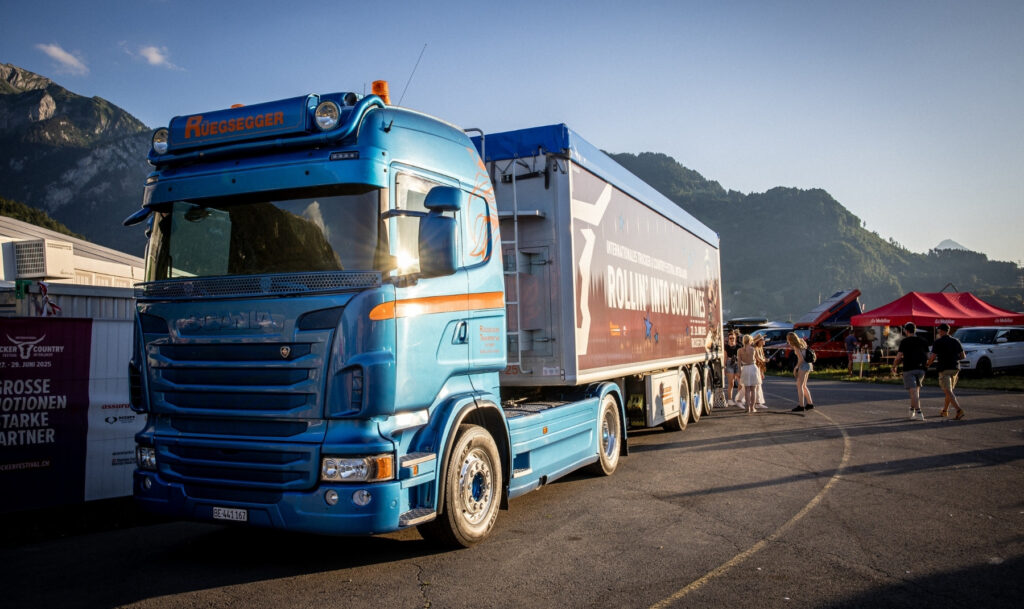
En collaboration avec AGROLA, le festival élargit l'offre proposée sur l'Truck Mile , avec des bornes de recharge modernes installées directement sur l'Truck Mile.
Pour la première fois, des bornes de recharge pour camions électriques (22 kW) seront disponibles sur place pendant l'International Trucker & Country-Festival d'Interlaken. Cette nouvelle infrastructure est située à proximité du Truck Info et permet de recharger facilement son véhicule pendant toute la durée du festival.
L’utilisation et le paiement (0,65 CHF par kWh) s’effectuent directement par les utilisateurs – en toute simplicité grâce à la carte AGROLA powercard, aux cartes de crédit ou à Twint.
Avec cette nouvelle offre, le festival, en collaboration avec AGROLA, met davantage l'accent sur les infrastructures modernes au sein du Truck Mile.


La Biker Zone un grand rassemblement de motards avec de nombreux temps forts et des motos impressionnantes.
La Biker Zone le lieu de rendez-vous de tous les passionnés de moto. Elle met l'accent sur les échanges, les rencontres et une ambiance détendue qui invite à s'attarder.
Ce qui t'attend :
Les motards disposent d'un parking gratuit réservé aux motards situé directement au village western accès par l'entrée 3), ainsi que d'une aire de camping séparée pour les tentes.
Présenté par Harley-Davidson Suisse

Partenaires médias


De l'action, du plaisir de conduire et des premières expériences de motocross pour les jeunes festivaliers.
Avec E-CROSS 4 KIDS, les Volt Monkeys proposent une nouvelle attraction passionnante au festival. Sur le parcours E-Cross, les enfants font leurs premières expériences de motocross – en toute sécurité, encadrés et dans la bonne humeur. Les motos spécialement adaptées leur garantissent une aventure unique sur deux roues – idéale pour les petits débutants et les jeunes pilotes audacieux. Les motos et l'équipement complet sont fournis ; aucune connaissance préalable n'est requise. Âge minimum requis : 3 ans. Cette activité est payante.

Le programme complet de musique et de spectacles, clairement organisé – avec en prime la playlist idéale pour vous immerger dans l'ambiance du festival.
Tous les artistes, tous les horaires, toutes les scènes :
Avec le programme en PDF, retrouvez le programme complet de musique et de spectacles en un coup d'œil – idéal pour imprimer.
Et pour ceux qui veulent se mettre dans l'ambiance avant l'heure :
La playlist officielle du festival propose la bande-son idéale – du country au rock, en passant par la fête alpine.
Il mercato delle scommesse online in Italia è uno dei più regolamentati e strutturati d’Europa. Questo non è avvenuto per caso: il percorso verso un quadro normativo organico ha richiesto anni di interventi legislativi, aggiustamenti successivi e un dialogo costante tra le autorità di vigilanza e gli operatori del settore. Comprendere come funziona questo sistema è fondamentale sia per chi opera nel comparto sia per i consumatori che intendono scommettere in modo consapevole e sicuro.
Per decenni, le scommesse in Italia sono state gestite quasi esclusivamente dallo Stato attraverso enti pubblici come il CONI e, successivamente, tramite concessioni affidate a soggetti privati selezionati. Il punto di svolta decisivo arrivò con il decreto legislativo n. 496 del 1948, che attribuì allo Stato il monopolio sulle scommesse ippiche, e con le successive normative che estesero il controllo pubblico ad altri ambiti del gioco.
La vera apertura al mercato privato iniziò negli anni Novanta, accelerata anche da pressioni comunitarie. L’Unione Europea, attraverso diverse sentenze della Corte di Giustizia, contestò il sistema italiano di concessioni come potenzialmente restrittivo della libera circolazione dei servizi. La sentenza Gambelli del 2003 e la sentenza Placanica del 2007 sono i due casi più citati in questo contesto: entrambe chiarirono che le restrizioni nazionali alle scommesse potevano essere giustificate solo da ragioni di ordine pubblico o di tutela dei consumatori, non da motivazioni puramente fiscali o protezionistiche.
In risposta a queste pressioni e alla crescente diffusione di operatori esteri che offrivano servizi online senza licenza italiana, il legislatore italiano avviò una progressiva liberalizzazione regolamentata. Nel 2006, con la legge n. 248 (il cosiddetto „decreto Bersani“), fu aperto per la prima volta il mercato delle scommesse sportive a operatori privati in possesso di specifica concessione, segnando una rottura netta con il passato monopolistico.
Il soggetto istituzionale che oggi sovrintende all’intero settore del gioco pubblico in Italia, incluse le scommesse online, è l’Agenzia delle Dogane e dei Monopoli (ADM), già Amministrazione Autonoma dei Monopoli di Stato (AAMS) fino alla fusione del 2012. L’ADM rilascia le concessioni agli operatori, verifica il rispetto dei requisiti tecnici e finanziari, e irroga sanzioni in caso di violazioni.
Per ottenere una concessione ADM, un operatore deve soddisfare una serie di requisiti stringenti: capitale sociale minimo, sede legale in uno Stato dell’Unione Europea o in un Paese con cui esiste un accordo di cooperazione amministrativa, assenza di precedenti penali per i soggetti controllanti, e conformità a standard tecnici certificati da enti accreditati. Il sistema di certificazione dei software di gioco, in particolare, è uno degli aspetti più tecnici e meno conosciuti della regolamentazione italiana: ogni piattaforma deve essere testata e approvata prima di poter accettare scommesse reali.
Le concessioni hanno durata limitata e sono soggette a rinnovo. Nel corso degli anni, il numero di operatori autorizzati è variato significativamente: dopo la prima gara del 2006, si sono susseguiti bandi nel 2011 e nel 2016, ciascuno con condizioni leggermente diverse in termini di canone di concessione, garanzie finanziarie e obblighi di rendicontazione. Attualmente, gli operatori titolari di concessione ADM possono offrire sia scommesse sportive che scommesse su eventi non sportivi, inclusi eventi politici e di intrattenimento, secondo cataloghi approvati dall’Agenzia.
Negli anni Duemiladieci, la regolamentazione italiana ha subito una svolta importante sul fronte della tutela dei consumatori e della lotta alla ludopatia. Il decreto legge n. 158 del 2012, noto come „decreto Balduzzi“, introdusse per la prima volta norme specifiche sulla pubblicità del gioco d’azzardo, imponendo l’obbligo di inserire messaggi di avvertimento sui rischi del gioco e vietando la pubblicità rivolta ai minori.
Il passo successivo, ben più radicale, fu compiuto con il decreto legge n. 87 del 2018, comunemente denominato „decreto Dignity“. Questo provvedimento vietò in modo quasi totale la pubblicità di giochi e scommesse in Italia, con pochissime eccezioni. Il divieto si estese a televisione, radio, stampa, internet, social media e affissioni. L’impatto sul settore fu immediato e significativo: molti operatori si trovarono a dover riprogettare completamente le proprie strategie di comunicazione, e alcuni accordi di sponsorizzazione sportiva di lunga data vennero rescissi. Il dibattito sull’efficacia di questa misura è ancora aperto: alcuni studi suggeriscono che il divieto pubblicitario non abbia ridotto il volume delle scommesse, ma abbia semmai spostato parte del traffico verso operatori non autorizzati.
Sul fronte della prevenzione della dipendenza, l’Italia ha sviluppato strumenti come il Registro Unico delle Esclusioni Volontarie (REV), che consente ai giocatori di autoescludersi da tutte le piattaforme di gioco autorizzate con un’unica segnalazione. Portali informativi come https://www.scommezoid.com/ approfondiscono le differenze tra operatori autorizzati e non, fornendo ai lettori strumenti utili per orientarsi in un mercato che, nonostante la regolamentazione, rimane complesso da navigare per il consumatore medio.
Nonostante il quadro normativo articolato, il fenomeno del gioco online non autorizzato rimane una sfida concreta per le autorità italiane. Gli operatori privi di licenza ADM, spesso con sede in giurisdizioni offshore come Curaçao o Malta (quest’ultima, pur essendo nell’UE, non è automaticamente equiparata a una licenza italiana), continuano ad attrarre una quota di giocatori italiani attraverso offerte più permissive in termini di bonus, limiti di scommessa e tipologie di gioco disponibili.
Per contrastare questo fenomeno, l’ADM si avvale di diversi strumenti. Il principale è il sistema di blocco dei siti, noto come „DNS blocking“: i provider di connessione internet italiani sono obbligati a bloccare l’accesso ai siti di gioco non autorizzati inseriti in una lista nera aggiornata periodicamente dall’Agenzia. Tuttavia, questo sistema presenta limiti evidenti: l’uso di VPN consente a molti utenti di aggirare i blocchi senza particolari difficoltà tecniche, e i siti non autorizzati tendono a migrare su nuovi domini con rapidità.
Un secondo strumento è il blocco dei pagamenti: le banche e i prestatori di servizi di pagamento operanti in Italia sono tenuti a non processare transazioni verso operatori di gioco non autorizzati. Questo meccanismo è considerato più efficace del blocco DNS perché più difficile da eludere, ma richiede una cooperazione attiva da parte degli istituti finanziari e un monitoraggio continuo dei circuiti di pagamento utilizzati dagli operatori illegali, che si adattano costantemente.
Sul piano sanzionatorio, le violazioni della normativa sul gioco non autorizzato possono comportare sanzioni amministrative molto elevate, con importi che possono raggiungere diverse centinaia di migliaia di euro per singola violazione, oltre alla revoca della concessione per gli operatori autorizzati che non rispettino le condizioni previste. Negli ultimi anni, l’ADM ha intensificato i controlli anche sui punti fisici, come le agenzie di scommesse, verificando il rispetto delle norme anti-riciclaggio e dei limiti alle scommesse in contanti introdotti progressivamente a partire dal 2016.
Il sistema italiano di regolamentazione delle scommesse online rappresenta un modello di riferimento nel panorama europeo per la sua completezza e per l’attenzione dedicata sia agli aspetti fiscali che a quelli di tutela sociale. Tuttavia, nessun sistema normativo è privo di lacune, e l’evoluzione tecnologica — dall’intelligenza artificiale applicata alle odds alle criptovalute come metodo di pagamento — pone continuamente nuove sfide al legislatore e all’autorità di vigilanza. Il prossimo ciclo di rinnovo delle concessioni, atteso nei prossimi anni, sarà probabilmente l’occasione per aggiornare il quadro regolatorio e affrontare le questioni ancora aperte, in un settore che in Italia genera ogni anno un giro d’affari di miliardi di euro e coinvolge milioni di giocatori.

L'impatience grandit : les factures pour le Truck Mile ont été envoyées !
Pour tous ceux qui ont reçu un courrier, voici ce qui s'applique désormais :
Votre emplacement n'est garanti qu'avec un paiement effectué dans les délais.
Informations importantes à l'attention des participants :
Les Tickets d'accès à la Truck Mile seront envoyés par la poste à partir de début juin 2026.
Un système de scan électronique ainsi que le contrôle au point de contrôle officiel garantiront un déroulement sans accroc.
Les Tickets d'accès personnels peuvent être transférés à un autre nom jusqu'au 22 mai 2026, 12h00.
Des frais de traitement de CHF 30.– seront facturés pour le transfert. Aucune modification de nom ne sera possible après cette date.
Bonne route – yeehaww !

Plus d'espace, plus de rythme, plus d'émotions : la Line Dance Hall
Avec la nouvelle Line Dance Hall, le line dance du Trucker & Country-Festival dispose pour la première fois des on popre espace indoor. Un vaste parquet, une sonorisation professionnelle et des conditions indépendantes des aléas météorologiques offrent un cadre idéal pour de longues sessions de danse.
For anyone in Canada who is new to online slots, the sheer variety of symbols, bonus features, and game mechanics can feel overwhelming at first. Unlike table games where the rules are relatively straightforward, modern video slots often come packed with wilds, scatters, multipliers, cascading reels, free spin rounds, and expanding symbols — each with its own logic and payout implications. Understanding what these elements do before wagering real money is not just helpful, it is genuinely important for managing expectations and making informed decisions. Fortunately, there are now several structured, beginner-friendly resources available that break down slot mechanics in plain language, specifically tailored to the Canadian market and its regulatory environment.
At the most basic level, slot symbols fall into a few distinct categories, and knowing the difference between them changes how you interpret what happens on the reels. Standard symbols are the regular paying icons — often themed around the game’s concept, whether that’s ancient mythology, fruit machines, or film franchises. These pay out when a certain number land in a consecutive line from left to right across an active payline, though some newer games use cluster pays or „ways to win“ systems that eliminate traditional paylines entirely.
Wild symbols function as substitutes for most other standard symbols, completing winning combinations that would otherwise fall short. Some wilds are static, while others are „expanding“ — meaning they stretch to fill an entire reel — or „sticky,“ remaining in place for multiple spins during a bonus round. Scatter symbols operate differently: they typically do not need to appear on a specific payline and instead trigger bonus features, most commonly free spins, when a minimum number (usually three) land anywhere on the reels. Understanding this distinction is essential because scatters are often the gateway to a slot’s most lucrative features.
Bonus symbols are a separate category again, often tied to specific mini-games or pick-and-click features. In some games, landing three bonus symbols activates a secondary screen where players select from a set of objects to reveal instant prizes or multipliers. These mechanics were popularized in the early 2000s with games like IGT’s „Cleopatra“ and Microgaming’s „Thunderstruck,“ which helped establish the modern template for feature-rich video slots. Canadian players encountering these games for the first time should note that the theoretical return-to-player (RTP) percentage — typically ranging from 92% to 97% in licensed games — is calculated across millions of spins, meaning individual sessions can vary dramatically from that average.
Canada’s online gambling landscape is shaped by a patchwork of provincial regulations. As of 2022, provinces like Ontario established their own regulated iGaming markets through iGaming Ontario, a subsidiary of the Alcohol and Gaming Commission of Ontario (AGCO). This created a clearer framework for which platforms can legally operate and what standards they must meet, including transparency around game mechanics and RTP disclosures. For beginners, this regulatory context matters because licensed platforms operating under these frameworks are required to provide accurate game information, making it easier to find reliable details about how specific slots function.
Several educational platforms and casino review sites have emerged to help Canadian players decode slot features without requiring them to deposit money first. Many of these resources offer free demo play alongside written guides that explain each symbol type, feature trigger, and volatility rating in accessible terms. Volatility — sometimes called variance — describes how frequently and how substantially a slot pays out. Low-volatility games pay out smaller amounts more regularly, while high-volatility games pay out larger amounts less frequently. This distinction is particularly important for beginners who need to match a game’s behavior to their own comfort level and bankroll size. Players researching these mechanics can find a useful breakdown here, where the technical aspects of slot features are explained in a format designed for those with no prior experience in online gambling.
Beyond individual review sites, the Canadian gaming education space has benefited from the growth of responsible gambling initiatives. Organizations like the Responsible Gambling Council (RGC), based in Toronto and operating since 1983, have developed resources that include explanations of how random number generators (RNGs) work, why past spins do not influence future outcomes, and how bonus features are designed to create the illusion of near-misses. These are not just theoretical points — they are practical tools for anyone trying to understand why a slot behaves the way it does during a session.
Once a beginner understands the basic symbol types, the next layer of knowledge involves how those symbols interact with a game’s underlying mathematical model. Every licensed slot operates on an RNG, which produces thousands of random number sequences per second. When a player presses spin, the RNG’s current output determines the position of each reel. This means no strategy can influence the outcome of a spin — a fact that distinguishes slots fundamentally from games like blackjack, where decisions affect probabilities.
The RTP percentage is perhaps the most misunderstood statistic in slot gaming. A game with a 96% RTP does not return 96 cents for every dollar wagered in a single session. Rather, across a statistically significant sample of millions of spins, the game is designed to return 96% of all money wagered to players collectively. Individual sessions are governed by short-term variance, which is why a player can win significantly in one session and lose their entire stake in another while playing the same game. Canadian regulators, particularly under the Ontario iGaming framework, now require licensed operators to display RTP information for each game, which is a meaningful improvement over the opacity that characterized earlier online gambling markets.
Bonus mechanics have grown substantially more complex since the mid-2010s. Features like „Megaways“ — a dynamic reel system developed by Big Time Gaming and licensed to dozens of other providers — can generate up to 117,649 ways to win on a single spin by varying the number of symbols on each reel. Games using this engine, such as „Bonanza Megaways“ (released in 2016) and „Extra Chilli,“ have become widely available on Canadian platforms. The cascading reels mechanic, where winning symbols disappear and are replaced by new ones falling from above, can create chain reactions of wins from a single spin — a feature that significantly changes how a player experiences a bonus round. Understanding that these mechanics are not simply cosmetic but have real mathematical implications for payout frequency and size is something that separates informed beginners from those who play purely on instinct.
Free spin rounds deserve particular attention because they are where the majority of a high-volatility slot’s theoretical return is concentrated. Game developers often design base game play to be relatively low-paying, with the RTP heavily weighted toward the free spin feature. This is why triggering the bonus round feels significant — mathematically, it often is. Some games allow players to purchase direct access to the free spin feature for a set multiple of their stake, a mechanic that has been regulated or restricted in several jurisdictions due to concerns about accelerated play.
For Canadian beginners, the practical takeaway from all of this is that time spent learning the mechanics of slot symbols and features before playing for real money is time well spent. Knowing what a wild does, how scatter triggers work, what volatility means for your session experience, and how RTP is actually calculated will not change the random nature of outcomes — but it will ensure that nothing on the screen comes as a surprise. That kind of informed approach is what distinguishes recreational play from uninformed gambling, and it is increasingly supported by the educational infrastructure available to Canadian players through both regulated platforms and independent learning resources.
The growth of Ontario’s regulated iGaming market since its April 2022 launch — which by mid-2023 had already attracted over 70 licensed operators — has created a more transparent environment where beginners can access accurate game information, use free play modes to explore slot mechanics without financial risk, and rely on RTP disclosures that are now a licensing requirement. For anyone starting their journey with online slots in Canada, taking advantage of these resources, particularly the educational guides that explain symbol functions and feature mechanics in plain language, provides a foundation that makes the experience both more understandable and more manageable from a responsible gambling perspective.
Au programme : des soirées Line Dance avec DJs, des ateliers variés, des spectacles et beaucoup de temps libre pour danser. La salle deviendra ainsi le point de rencontre des danseurs et danseuses de tous niveaux – du débutant au danseur de Line Dance expérimenté.
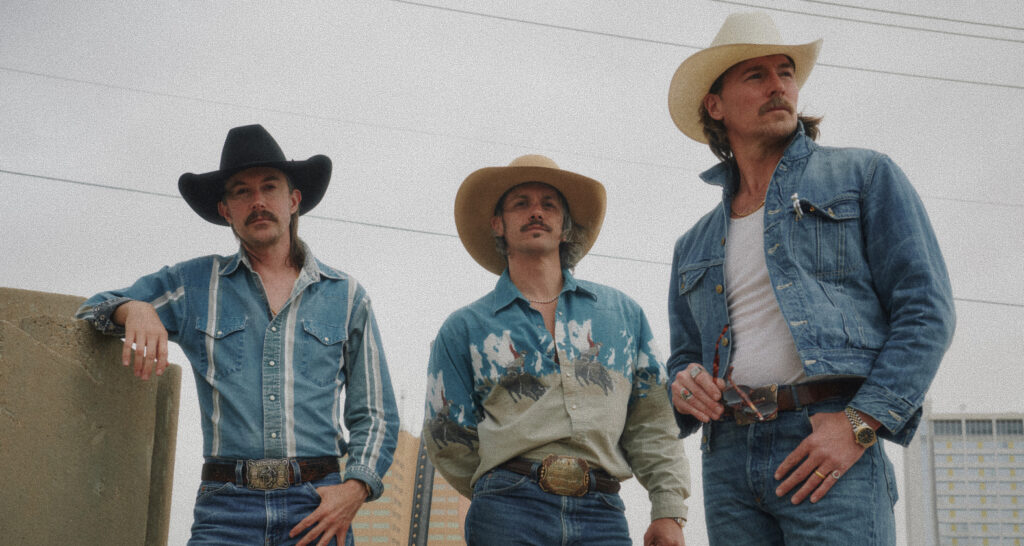
Le samedi soir 27 juin 2026, trois artistes américains, avec leur son country authentique et leur ambiance Americana, assureront une soirée mémorable dans le Chapiteau de fête.
En 2026, un «Spotlight Artist» fera pour la première fois l'ouverture sur la scène principale : avec Cash Muretta, originaire du Montana/USA, nous ouvrirons la soirée avec un son country frais et authentique, et offrirons à un jeune artiste la scène devant un large public.
Ensuite, Jesse Daniel prendra le relais. Le Californien incarne le son authentique de Bakersfield et le honky-tonk brut – ses chansons racontent des histoires de la vie de la classe ouvrière et de son propre passé mouvementé.
Pour le grand final, le groupe texan Midland sera sur scène. Les musiciens, plusieurs fois nominés aux Grammy Awards, combinent des racines country classiques avec une touche de modernité. Avec des harmonies vocales puissantes, des tubes connus et un spectacle live énergique, ils assureront une conclusion mémorable à l'American Country Night.